Shopify Development

Shopify handles the plumbing. What you pay us for is the part customers actually see.

11 capabilities 05 answers

The platform is the easy decision. Everything after it is the work

Shopify takes a long list of problems off the table on day one: hosting, security, PCI, uptime, and a checkout that has been tested by more people than yours ever will be. That is why most catalogues belong on it. What it does not decide is how your products are structured, what your theme does to a phone on a weak connection, or which of several thousand apps you actually need — and those are the decisions that separate a store that trades from a store that merely exists.

So we build the theme around your catalogue rather than buying one and bending it, keep the app list short because every app is weight on a page someone is waiting for, and hand the store over to your team. Needing a developer to change a price is a design fault, not a service.

What a Shopify build actually involves

The build

Custom Theme Development

Two colleagues at a wide monitor reviewing a knitwear store, the live page on one half and the same page open in a design tool on the other, a tablet showing it on the desk between them.

A bought theme is somebody else’s compromises, plus a few thousand lines of code paths your shop will never use, loading on every page. We build the theme around your catalogue and your merchandising instead, which is what keeps the store quick and keeps a redesign from meaning a rebuild.

The build

Store Setup and Migration

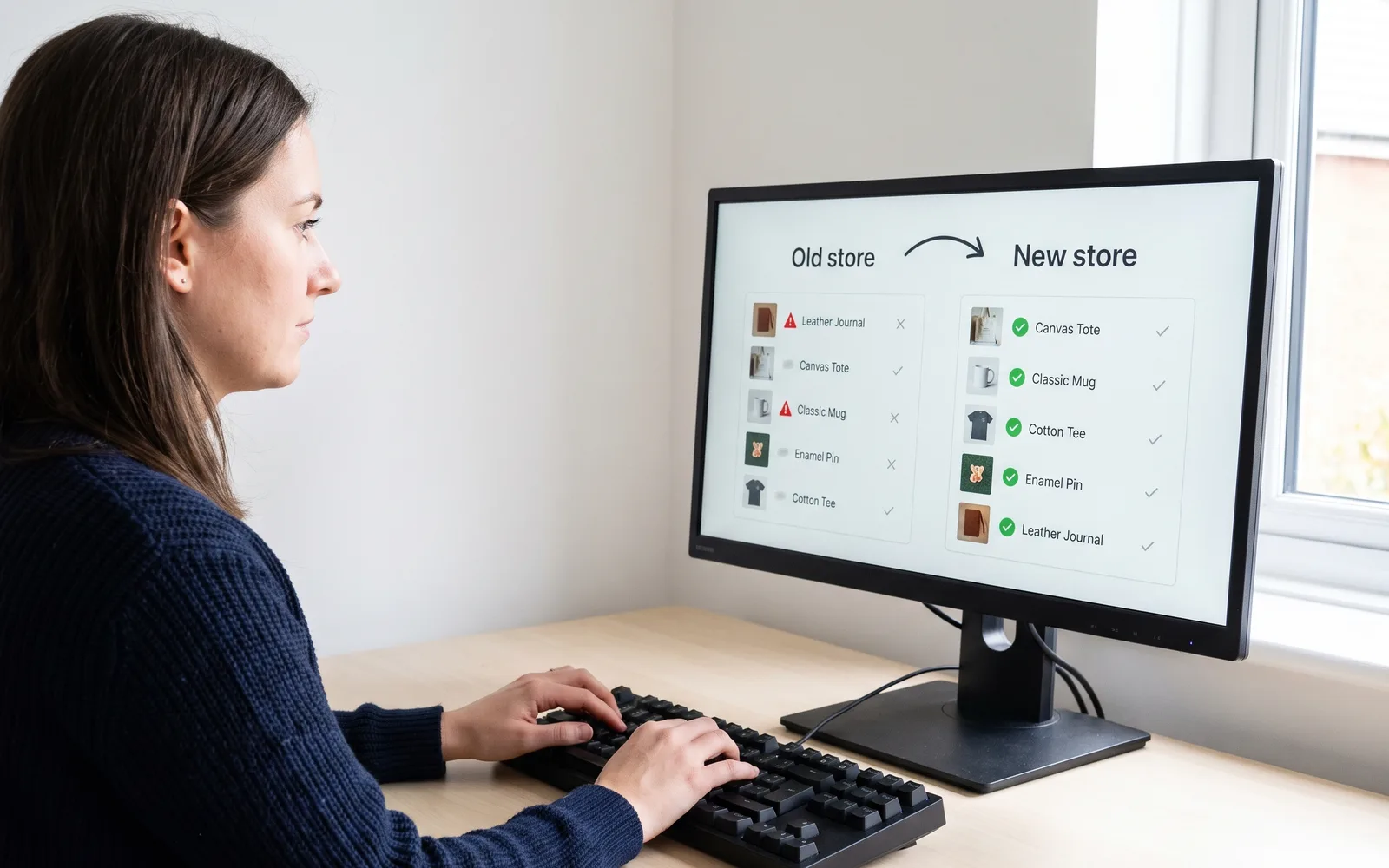
A woman at a monitor moving one product catalogue between two store admin panels shown side by side, the left list untidy and the right one in order.

Moving from WooCommerce, Magento or a platform that has quietly stopped being maintained. The products, the customers, the order history and — the part that decides whether it hurts — the URL map, agreed before launch rather than reconstructed afterwards from a fall in traffic.

The build

Shopify Plus

A team at a meeting table reviewing a wall slide of store sales across four cities, a world map above the figures.

When the volume, the territories or the B2B rules outgrow the standard plan: checkout extensibility, scripts, multiple storefronts and the automation that stops your team doing the same thing by hand every morning. Worth the money when you need it, and not a day before.

The shop

Catalogue and Collections

A product shoot in progress on a white sweep, the same four products already showing as a grid on the laptop alongside.

Variants, options, metafields and the collection logic that decides what a customer actually sees when they land on a category. It is the least glamorous week of the project and the one that determines whether anybody finds anything.

The shop

Checkout and Payments

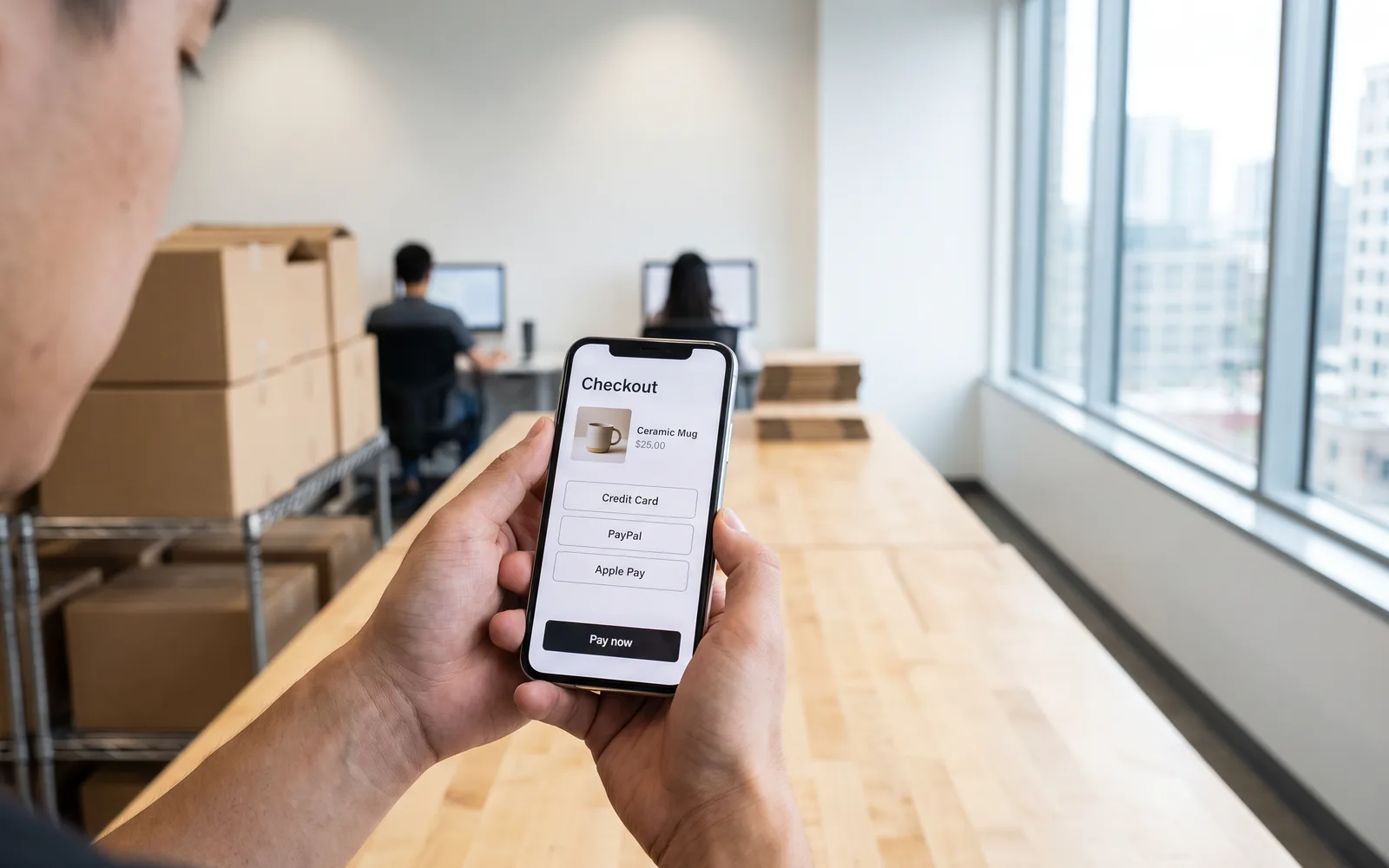
Hands holding a phone over a bench on a fulfilment floor, a store checkout open on it with the payment options and the pay button, racked cartons behind.

Shopify owns most of the checkout, which is a mercy, and there is still plenty left to get wrong: the payment methods people in your market actually use, express wallets, shipping rules that match what your courier really does, and taxes that hold up at the border.

The shop

Apps and Custom Functionality

A man at a laptop working through the installed-apps list in a store admin, a notepad of struck-through items beside him.

Every app is a monthly line on the invoice and a little more weight on a page someone is waiting for. We will tell you when an app is the right answer, and when forty lines of code would do the same job without the subscription or the slowdown.

After launch

Speed and Core Web Vitals

A woman at a monitor studying a page-load breakdown, six coloured bars of differing length with a red budget line that only the longest one crosses.

A Shopify store is exactly as fast as the theme and the apps you put on it. Image handling, script discipline and a short app list are most of the battle, and we test on a mid-range phone on a normal connection rather than on the office wifi.

After launch

Maintenance and Support

A support agent in a headset at a store dashboard, a paper wall planner of sale dates behind her.

Themes drift, apps update, and a sale is always coming. Someone has to watch the store, fix the small things before they become the reason an order failed, and be available in the week that actually matters. That is an arrangement, not a retainer nobody reads.

Runs alongside

E-commerce Development

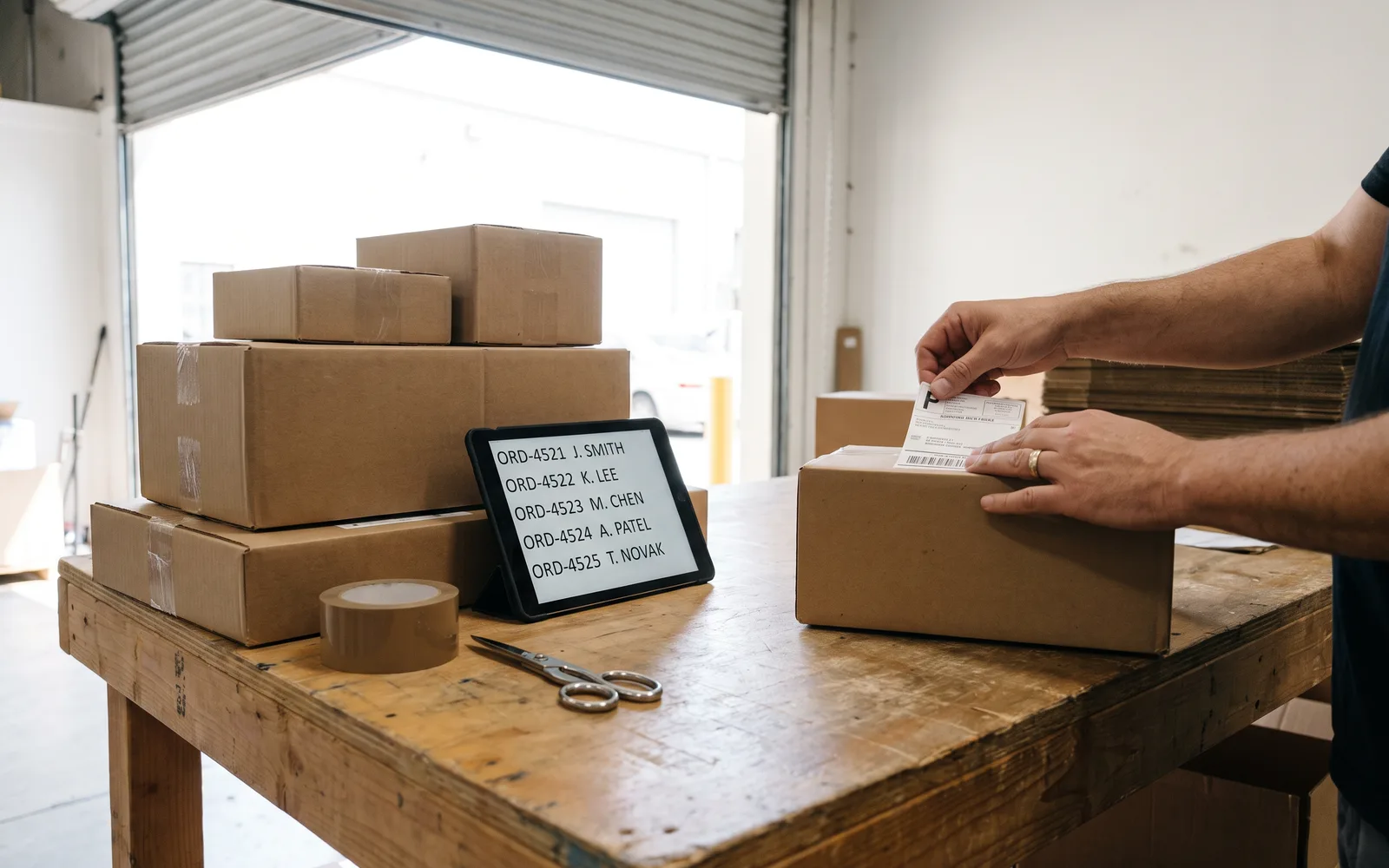
An order being labelled at a packing bench, the day’s pick list open on a tablet propped against the parcels.

If the platform decision is not settled yet, or the catalogue is unusual enough that a hosted platform would fight you, that is a wider conversation and it has its own page.

See our e-commerce development
Runs alongside

Website Development

A designer sketching page layouts in pencil on paper beside a monitor showing the finished live page.

If what you are building is a site rather than a shop — or a site with a shop attached to one corner of it — the build work sits on its own page.

See our website development
Runs alongside

Shopify Development in Delhi

Two colleagues talking across their desks in a high-floor office, a daylight city skyline through the window wall behind them.

Our Shopify work is run out of Delhi NCR. The questions that come up first are usually about migration and about who runs the store afterwards, and that page answers both.

Shopify development in Delhi

Frequently Asked Questions

Is Shopify right for my catalogue?

Usually, and we will say so when it is not. Shopify suits most catalogues and saves you the maintenance that comes with running your own stack. It fights you when your pricing rules are genuinely unusual, when the store has to live inside a much larger site, or when a system you cannot move has to stay the source of truth. Those are real cases and they are not most cases.

Can you move our existing store without losing search traffic?

Yes, and the redirect map is the part that decides it. Every product and category URL that earns traffic today is mapped to where it will live before anything launches, and we keep that map as the record. A migration that costs you organic traffic has cost you more than it saved.

Do we need Shopify Plus?

Probably not yet. Plus earns its price on volume, on multiple storefronts or territories, on B2B pricing rules, and on checkout changes the standard plan will not let you make. If none of those describe you, the money is better spent on the storefront. We would rather tell you that than sell you the upgrade.

How many apps should our store have?

Fewer than you have been sold. Each one costs a monthly fee and a slice of your page speed, and a handful of them do things a theme can do natively. We will audit the list and tell you what it is costing you in monthly fees and in page weight, both measured rather than asserted.

Will my team be able to run the store?

That is the test we build towards. Products, prices, collections, pages and campaigns should never need a developer. We hand over with a walkthrough and written notes, and stay available for the things that genuinely need code.

Let’s Work Together.

contact@reddashmedia.com Contact us
Get a Quote